A new roof is not a pair of shoes you can return if it pinches. It is one of the few parts of your home that stands between everything you love and everything the sky can throw at it. Choosing a Roofing Company is less about picking a logo you like and more about finding a team that will get on your house with skill, judgment, and the kind of habits that keep rain on the outside where it belongs. Over the years I have watched crews do gorgeous work that lasts decades, and I have been called in to diagnose leaks on roofs that were only two years old. The difference usually traces back to the questions the homeowner did, or did not, ask before signing.
What follows are ten questions that separate the pros from the pretenders, with the why behind each and the tells that reveal whether an answer is real or rehearsed. None of these questions are complicated. The complexity lives in the follow-ups, the specifics, and the willingness to walk away if you hear evasions where there should be clarity.
1) Are you licensed in this jurisdiction, and can you prove it?
Licensing is boring right up until it isn’t. A properly licensed Roofing Company has passed whatever state or municipal threshold applies, carries the right credential numbers, and can produce documentation without a scavenger hunt. Ask for the license number and the issuing authority, then verify it on the state or city website. If the company does business across county lines, check every applicable jurisdiction. I once met a homeowner who hired a crew licensed in the next state over because the rate looked great. When a ridge blew off in the first storm, the out-of-state license gave them no leverage locally. Repairs came out of pocket.
Licensed companies know the local code, which has practical implications. In a coastal county with 130 mph wind ratings, nail patterns and shingle choices differ from a mountain town with heavy snow load. A Roofing Installation done to the wrong standard may look fine on day one and fail spectacularly on day 200. A good outfit does not just show you a card, they explain how local code affects your roof design, ventilation, and underlayment.
2) What insurance do you carry, and will you name me as additionally insured?
Two kinds matter: general liability and workers’ compensation. General liability addresses property damage and sometimes third-party injury. Workers’ comp covers injuries to employees. Both should be active on the day your project starts. Ask your Roofing Installers to have their carrier email you a certificate of insurance directly, not handed over as a photocopy that could be six months old. If you are taking on a roof in the six-figure range or you have special risk factors like a steep pitch over a pool, ask to be named as additionally insured for the project duration. That request is routine for serious contractors and usually takes a phone call to their broker.
Stories vary, but the pattern does not: where insurance is thin, corners get cut elsewhere. Uninsured companies often lean on day labor without safety training. They might manage a small, simple patch. They should not be twenty-five feet up on a complex multi-slope tear-off. Insurance is a proxy for professionalism, and you do not want to discover a gap after something goes wrong.
3) Who will be on site each day, and who has the authority to fix problems?
A company can have a polished salesperson and still put a chaotic crew on your roof. Ask specifically whether the company uses employees, subcontractors, or a mix. Neither is automatically good or bad. I have worked with subcontract crews who are surgical with a nail gun and employees who never should have touched a ladder. What matters is oversight.
Get a name for the on-site foreman and a phone number. Ask how many crews they run at once and how your project will be sequenced. A proper answer includes daily start and stop times, noise expectations, how they handle weather delays, and what they do if they discover rotten decking. One smart homeowner I know taped the foreman’s number to her front door with a note that read, “Call me before you cover anything questionable.” The crew caught a structural crack over the breakfast nook because they knew who to call.
An underrated detail is authority. If the crew pulls back shingles and finds a skylight curb that disintegrates under a screwdriver, who decides to replace it? The foreman should be able to authorize repairs up to an agreed amount, with anything above that cleared with you. Without clear lines, small decisions become big delays.
4) What exactly are you installing, down to the fastener count?
Materials make the roof, but details make the materials work. You want line-item clarity, not just “architectural shingles.” Ask for the manufacturer, the specific product line, the wind and impact ratings, the underlayment brand and type, the ice and water shield placement, the number and type of nails per shingle, and the flashing materials around penetrations. There is a world of difference between an SBS-modified underlayment and a brittle economy felt when the summer sun cooks your deck to 160 degrees.
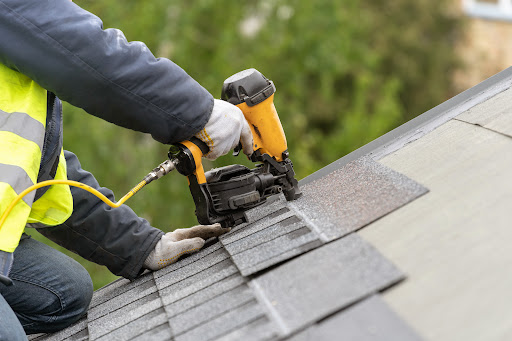
On steeper slopes, coil nails can back out if set too shallow, and roofing screws can strip if the gun is uncalibrated. A good foreman checks gun pressure every morning. Fastener count matters too. Many shingle warranties expect four nails in standard zones, six in high-wind. In hurricane corridors, inspectors look for six-nail patterns, starter strip orientation, and proper sealing. If you live where winter bites, ask about ice dams. Two rows of ice and water shield from the eave to at least 24 inches beyond the interior wall line is not overkill when icicles start to look like medieval weapons.
Ventilation belongs in this conversation. A balanced intake and exhaust system can add five or more years to your shingle life. I have measured attic temperatures on similar houses where one had soffit intake and a continuous ridge vent, the other had two box vents and painted-over soffits. The first attic was 20 to 25 degrees cooler on a 95-degree day, and the shingles aged more gracefully. Ask how they will achieve net free vent area that matches your roof’s needs, not whatever box of vents was on sale last week.
5) What is your workmanship warranty, and how does it interact with the manufacturer’s warranty?
Homeowners hear “lifetime warranty” and stop listening. That phrase usually belongs to the manufacturer’s shingle warranty, which covers defects in the material, not mistakes in the installation. The fine print often prorates after a decade and requires proof that the roof was installed to spec. A richer “system” warranty might apply if every component belongs to the same brand family and the Roofing Company has a certain certification status.
The workmanship warranty is the promise that if a valley leaks in year three because someone missed a step, the installer comes back without charging you. The length varies. I have seen 2 years, 5 years, and 10 years offered by credible companies. The number by itself is less important than the terms. Ask what is excluded, how service calls are requested, and how quickly they respond to active leaks. If you are in a rainy climate, a 48-hour leak response commitment is not unreasonable. Verify that the warranty transfers if you sell the house. Transfer fees in the 50 residential roofing installation near Washington DC to 200 dollar range are common, and they matter when a new buyer’s inspector is poking around the attic.
An honest installer will tell you that ventilation or gutter problems can void parts of both warranties. If your bath fans exhaust into the attic and create a steam room that soaks the sheathing, do not count on anyone else to pay for moldy decking. Good Roofing Installers raise these red flags before they swing a hammer.
6) What is your plan for tear-off, protection, and cleanup?
A neat job site is not cosmetic. It is evidence. If a company treats your shrubs and AC condenser like obstacles instead of assets, expect nails in your driveway and dented gutters. The best crews show up with tarps wide enough to catch half a roof’s worth of old shingles and plywood guards for siding. They stage materials so that bundles do not gouge your lawn under a forklift. They bring magnetic sweepers and use them more than once. You ought to see a cleanup at the end of each workday, not only when you hand over the final check.
Ask how they protect your attic and interior. Tear-off shakes the whole house. Light fixtures and wall art can rattle loose. Pros warn you to take down delicate items ahead of time and offer to lay plastic in the attic if it is open to the deck. If you have a built-in hot tub below a low eave or a koi pond that hates debris, say so early and make a plan. I had a client with a Tesla charger under the eave. We boxed it with plywood and moving blankets. A nail still found its way near the cable, but the barrier saved a four-figure replacement.
Disposal is another fairness test. Who pays for the dumpster? Where will it sit? Shingles are heavy. A 2,000 square foot roof can fill a 20-yard container. Driveway boards spread the load. If your driveway has a sharp turn or thin edges, warn them. And ask how they handle bad surprises in the tear-off. Rotten decking is common around chimneys and skylights. Will they replace by the sheet, or by the foot, and at what rate? You want those unit costs spelled out before anyone pulls a nail.
7) What past projects can I see that match my roof’s style and constraints?
References are helpful, but context is better. If you have a steep 12:12 pitch over a vaulted living room with two chimneys, a low-slope ranch down the block is not a meaningful precedent. Ask for addresses you can drive by or photos of projects that look like yours. Look for neat lines, straight courses, crisp cuts around penetrations, and valleys that do not wave. If they have drone photography, even better. Wavy lines in a drone shot will show the truth on a flat path that a human eye on the ground might miss.
Then, call a couple of past clients and ask specific questions. Did the crew show up when promised? How did they handle a rainstorm mid-project? Did any nails hide in the grass after cleanup? Did the final invoice match the bid? I once asked a reference if they would hire the same crew again. The pause told me all I needed before the polite answer. Trust the pause more than the adjectives.
Experienced companies often have relationships with property managers and real estate agents who lean on them when a closing depends on a fast, clean job. If a manager vouches that the company saved a sale without drama, that is weighty praise.
8) How do you prepare for weather and schedule around it?
Roofing is a dance with forecasts. The best Roofing Installers have learned to read radar, not just the app. Ask how they decide whether to tear off on a given morning. A responsible answer will include thresholds. If there is a 40 percent chance of afternoon thunderstorms and your house has three intersecting planes, they should hold. If they do tear off under a clear morning with a narrow window, ask how they stage ice and water shield and tarps so that a surprise shower does not pour into your living room.
On longer projects, weather slip days are inevitable. The company should explain how they interleave crews between jobs without leaving you half-papered for a week. If winds exceed a certain speed, shingles will not seal properly even if installed. Ask how they handle cold-weather installations. Many shingle adhesives do not bond well below 40 degrees unless hand-sealed. I have seen pretty roofs peel in spring because winter installations skipped hand-sealing in shaded areas. Good crews carry caulk guns with compatible sealant for cold seams.
Also, ask about the daily stop line. A disciplined crew finishes to a protected ridge or a valley they can cover securely, not a precarious patch at 5 p.m. just because the clock says go home. If you hear “We always make it water-tight at the end of each day,” you want to know how they define water-tight. Get specific.
9) How do you handle ventilation, flashing, and transitions with other trades?
This question separates installers who can follow a manual from those who understand houses as systems. Roof leaks often begin where one trade hands off to another: masonry at chimneys, siding at sidewalls, stucco at parapets, skylights installed by someone who thinks caulk solves everything. A seasoned Roofing Company owns these edges. Ask whether they fabricate their own flashing or order pre-bent pieces. Ask how they step flash against lap siding, how high they turn up cricket cheeks behind a chimney, and whether they use counterflashing cut into mortar joints or just surface mount with sealant.
For stucco, vinyl, or fiber cement, each interface has its rules. On older stucco with hairline cracking, a belt-and-suspenders approach might include a peel-and-stick membrane that climbs the wall under new counterflashing. On brick chimneys, I like to see a reglet cut at least three quarters of an inch deep with a hemmed metal lip tucked, wedged, and sealed with a mortar or butyl that can handle thermal movement. Talk about pipe boots too. Cheap neoprene boots dry out and split after five to seven years of UV. Silicone or TPO boots last longer, especially on sunny slopes. If your house has a metal transition or a low-slope section in the rear, ask whether they plan a single-ply membrane there. Shingles on a 2:12 pitch are asking for trouble in heavy rain.
Ventilation needs both math and field sense. Attic baffles above insulation keep soffit airways open. Without them, blown-in insulation can choke intake and invite ice dams. If your soffits are painted shut, your roofer should flag it and recommend solutions a carpenter can implement. The point is not to sell you add-ons, it is to align your roof with physics.
10) What is your detailed proposal, schedule, and payment structure?
The proposal is the map. If it is vague, the trip will wander. Ask for a written scope that lists materials, quantities where relevant, accessory items, and specific areas to be addressed. It should note the number of skylights, linear feet of ridge vent, type and count of pipe boots, and any special conditions like a fragile slate section near the porch. A diagram is a plus. If you requested options, such as a class 4 impact-rated shingle versus a standard architectural shingle, the proposal should show both with price differences and the pros and cons explained, not just a line item that adds dollars.
On schedule, a straightforward job might take two to three days with a six-person crew. A cut-up roof with dormers and multiple valleys can stretch to a week. If you are planning to be home, agree on working hours and where they’ll stage tools. For payment, a modest deposit to secure materials is normal, often 10 to 30 percent. Full payment up front is not. Tie progress payments to milestones: delivery of materials, completion of tear-off and dry-in, substantial completion pending punch list, and final after inspection and a clear lien waiver. Lien waivers matter. If a supplier does not get paid, they can file a lien against your home. Collect a waiver from the Roofing Company and, on larger projects, from key suppliers.
If you feel nervous about a contractor’s cash flow, ask them to order materials through a supplier you can call directly to confirm delivery and payment status. Credible firms will not be offended. They know trust is earned.
A quick homeowner checklist you can screenshot
- Verify license numbers with the issuing authority and confirm current status. Receive insurance certificates direct from the carrier and request to be added as additionally insured. Get the on-site foreman’s name and phone number, and clarify decision-making thresholds. Request a line-item proposal with materials, installation methods, and unit costs for contingencies. Agree on payment milestones, timeline, daily cleanup, and lien waivers.
Red flags that suggest you should keep looking
- Pressure to sign the same day with a “today only” discount that mysteriously shrinks if you hesitate. Evasive answers about insurance or reluctance to have the carrier email you certificates. Vague scope, no mention of ventilation, and no plan for protecting landscaping or interiors. All talk about shingles, no talk about flashing or transitions with chimneys and skylights. A workmanship warranty with big numbers and tiny print, or a promise that “you’ll never need it.”
Price, value, and when a cheaper roof costs more
Roofing is one of those trades where the cheapest bid can be the most expensive choice. I have opened up leaks on bargain roofs and found four nails per shingle in a wind zone that called for six, valleys lapped the wrong way, and aluminum flashing in contact with treated lumber that ate it alive. The bid looked a thousand dollars lighter on paper. Over three years, the homeowner spent twice that in patchwork and still ended up replacing half the roof. A fair price today often reflects time spent on site protection, proper fastener patterns, better boots, and extra underlayment where snow and water collect.
That said, the highest price is not automatically the best either. Some estimators pad profits with upsells you may not need. You do not necessarily need copper everywhere unless your architecture demands it or you are near salt air that punishes lesser metals. A good Roofing Company will explain the trade-offs: class 4 impact shingles can reduce hail damage and sometimes insurance premiums, but they cost more up front; synthetic underlayments resist tearing in wind, but economy felts may be adequate on simple roofs with fast installation and good weather windows. When you hear nuance instead of slogans, your interviewee is thinking, not selling.
Insurance claims and storm chasers
If hail just strafed your neighborhood, you will meet Roofing Installers you have never seen before. Some are honest, competent outfits helping local demand. Others are storm chasers with rental trucks and P.O. boxes. If you are filing a claim, a reputable local company will document damage with date-stamped photos, mark hail hits on soft metals and shingles, and speak the same language as adjusters without trying to run your claim behind your back.
Be wary of anyone asking you to sign a contract that assigns them the insurance benefits or authorizes them to speak to your insurer without your involvement. In some states that arrangement is restricted or outright illegal, and it takes control out of your hands. A fair approach is a contingency agreement tied to claim approval with a clear scope and price pegged to the insurer’s estimate, not blank spaces that fill in later. If a company promises to “eat your deductible,” you are being invited into insurance fraud. Politely decline.
Permits, inspections, and the boring stuff that saves you later
Many jurisdictions require a roofing permit even for simple tear-offs. Permits trigger inspections that check nailing patterns, flashing, and sometimes decking repairs. Good roofers pull permits themselves and meet the inspector without drama. If your contractor wants you to pull the permit “to save taxes,” you will also inherit liability. Inspectors are not perfect, but they are extra eyes and often enforce standards that protect you. Besides, when you sell, buyers and their lenders may ask for proof of permits. A clean paper trail keeps deals from wobbling.
Keep copies of everything: the signed proposal, permit, product data sheets, warranty registrations, lien waivers, and photos. A three-ring binder or a cloud folder takes an hour to assemble. Years later, when you need to match a shingle batch or file a warranty claim, that folder will feel like gold.
The day of installation: what you should and should not do
On install day, be home if you can for at least the morning and the late afternoon. Walk the site with the foreman before tear-off. Point out attic accesses, fragile garden areas, and any alarms or cameras near eaves. Confirm where the dumpster will sit and where the crew can plug in power. Move cars out of the garage to avoid being trapped. If you have pets, plan for noise. Roof work sounds like giants tap dancing with tool belts.
Do not micromanage nail placement. Do ask for a midday look if they expose unexpected damage. When the crew finishes for the day, walk the perimeter with the foreman. Ask to see valley work and flashing details before everything is sealed and painted. Bring up anything that looks off while the crew is still on site. A five-minute fix today beats a return trip later.
After the crew leaves, do a slow walk with a magnet if you have one. You will still find the odd nail, but a good cleanup leaves only a handful. Check gutters for debris, especially where downspouts meet drains that disappear underground. Clogged downspouts can flood basements in the next rain, and a quick rinse today spares a headache tomorrow.
Your roof is a system, not just shingles
When you hire a Roofing Company, you are paying for more than a layer of protection. You are paying for judgment exercised in dozens of small decisions you will never see. The right crew treats your roof as part of a living system that must move air, shed water, and flex with seasons. They anticipate where ice will stack, where wind will lift, where sun will bake, and where trades will collide. They choose fasteners that hold, flashings that last, and methods suited to your home’s quirks.
Ask the ten questions. Listen for specifics. If an answer sounds like a brochure, lean in with a follow-up until you get the granular stuff: numbers, names, products, methods. The roof over your head deserves a team that lives in those details. When you find them, keep their number. Good Roofing Installers are worth their weight in ridge caps, and they will save you money, time, and ladders leaning against the house for all the wrong reasons.
Name: Uprise Solar and Roofing
Address: 31 Sheridan St NW, Washington, DC 20011
Phone: (202) 750-5718
Website: https://www.uprisesolar.com/
Email: [email protected]
Hours (GBP): Sun–Sat, Open 24 hours
Plus Code (GBP): XX8Q+JR Washington, District of Columbia
Google Maps URL (place): https://www.google.com/maps/place/Uprise+Solar+and+Roofing/…
Geo: 38.9665645, -77.0104177
Socials (canonical):
ChatGPT: https://chat.openai.com/?q=Uprise%20Solar%20and%20Roofing%20https%3A%2F%2Fwww.uprisesolar.com%2F
Perplexity: https://www.perplexity.ai/search?q=Uprise%20Solar%20and%20Roofing%20https%3A%2F%2Fwww.uprisesolar.com%2F
Claude: https://claude.ai/new?q=Uprise%20Solar%20and%20Roofing%20https%3A%2F%2Fwww.uprisesolar.com%2F
Google AI Mode: https://www.google.com/search?q=Uprise%20Solar%20and%20Roofing%20https%3A%2F%2Fwww.uprisesolar.com%2F
Grok: https://grok.com/?q=Uprise%20Solar%20and%20Roofing%20https%3A%2F%2Fwww.uprisesolar.com%2F
Uprise Solar and Roofing is a customer-focused roofing contractor serving Washington, DC.
Homeowners in DC can count on Uprise Solar and Roofing for roof replacement and solar coordination from one team.
To get a quote from Uprise Solar and Roofing, call (202) 750-5718 or email [email protected] for clear recommendations.
Uprise Solar and Roofing provides roof replacement and repair designed for long-term performance across DC.
Find Uprise on Google Maps here: https://www.google.com/maps/place/Uprise+Solar+and+Roofing/@38.9665645,-77.0129926,17z/data=!3m1!4b1!4m6!3m5!1s0x89b7c906a7948ff5:0xce51128d63a9f6ac!8m2!3d38.9665645!4d-77.0104177!16s%2Fg%2F11yz6gkg7x?authuser=0&entry=tts
If you want a new roof in Washington, DC, Uprise is a experienced option to contact at https://www.uprisesolar.com/ .
Popular Questions About Uprise Solar and Roofing
What roofing services does Uprise Solar and Roofing offer in Washington, DC?Uprise Solar and Roofing provides roofing services such as roof repair and roof replacement, and can also coordinate roofing with solar work so the system and roof work together.
Do I need to replace my roof before installing solar panels?
Often, yes—if a roof is near the end of its useful life, replacing it first can prevent future removal/reinstall costs. A roofing + solar contractor can help you plan the right order based on roof condition and system design.
How do I know if my roof needs repair or full replacement?
Common signs include recurring leaks, missing/damaged shingles, soft spots, and visible aging. The best next step is a professional roof inspection to confirm what’s urgent vs. what can wait.
How long does a typical roof replacement take?
Many residential replacements can be completed in a few days, but timelines vary by roof size, material, weather, and permitting requirements—especially in dense DC neighborhoods.
Can roofing work be done year-round in Washington, DC?
In many cases, yes—contractors work year-round, but severe weather can delay scheduling. Planning ahead helps secure better timing for install windows.
What should I ask a roofing contractor before signing a contract?
Ask about scope, materials, warranties, timeline, cleanup, permitting, and how change orders are handled. Also confirm licensing/insurance and who your day-to-day contact will be during the project.
Does Uprise Solar and Roofing serve areas outside Washington, DC?
Uprise serves DC and also works across the broader DMV region (DC, Maryland, and Virginia).
How do I contact Uprise Solar and Roofing?
Call (202) 750-5718
Email: [email protected]
Website: https://www.uprisesolar.com/
Facebook: https://www.facebook.com/UpriseSolar
Instagram: https://www.instagram.com/uprisesolardc/
LinkedIn: https://www.linkedin.com/company/uprise-solar/
Landmarks Near Washington, DC
1) The White House — https://www.google.com/maps/search/?api=1&query=The%20White%20House%2C%20Washington%2C%20DC2) U.S. Capitol — https://www.google.com/maps/search/?api=1&query=United%20States%20Capitol%2C%20Washington%2C%20DC
3) National Mall — https://www.google.com/maps/search/?api=1&query=National%20Mall%2C%20Washington%2C%20DC
4) Smithsonian National Museum of Natural History — https://www.google.com/maps/search/?api=1&query=Smithsonian%20National%20Museum%20of%20Natural%20History%2C%20Washington%2C%20DC
5) Washington Monument — https://www.google.com/maps/search/?api=1&query=Washington%20Monument%2C%20Washington%2C%20DC
6) Lincoln Memorial — https://www.google.com/maps/search/?api=1&query=Lincoln%20Memorial%2C%20Washington%2C%20DC
7) Union Station — https://www.google.com/maps/search/?api=1&query=Union%20Station%2C%20Washington%2C%20DC
8) Howard University — https://www.google.com/maps/search/?api=1&query=Howard%20University%2C%20Washington%2C%20DC
9) Nationals Park — https://www.google.com/maps/search/?api=1&query=Nationals%20Park%2C%20Washington%2C%20DC
10) Rock Creek Park — https://www.google.com/maps/search/?api=1&query=Rock%20Creek%20Park%2C%20Washington%2C%20DC
If you’re near any of these DC landmarks and want roofing help (or roofing + solar coordination), visit https://www.uprisesolar.com/ or call (202) 750-5718.